EVERY DAY IS A BLACK FRIDAY HERE AT THE OFFICE CHAIR MAN
SUMMER 2026 OFFER! (Ends 31 August 2026) Qty 1–5 5%, 6–10 10%, 11–15 15%,16–20 20%, 21+ 25% Saving.
Autumn is a useful point in the year to look around the office and ask a simple question: is the furniture still doing the job it was bought to do?
Teams change, headcounts move up or down, working patterns evolve and spaces are often adapted over time. Furniture that suited the office a few years ago may no longer be the best fit today. At the same time, plenty of desks, chairs and storage can remain perfectly serviceable, so an office refresh should not automatically mean replacing everything.
The best approach is to prioritise. Start with the items that affect day-to-day comfort, suitability and usability, then move on to furniture that can improve the way space is organised or shared.
At The Office Chair Man, we supply a wide range of quality used office furniture, so we regularly see businesses making targeted upgrades rather than starting again from scratch. If you are planning an autumn refresh, the order below is a practical way to decide where your budget should go first.
Did you know? An office chair can still look presentable even when its adjustments are no longer working correctly. When did you last check your office seating?
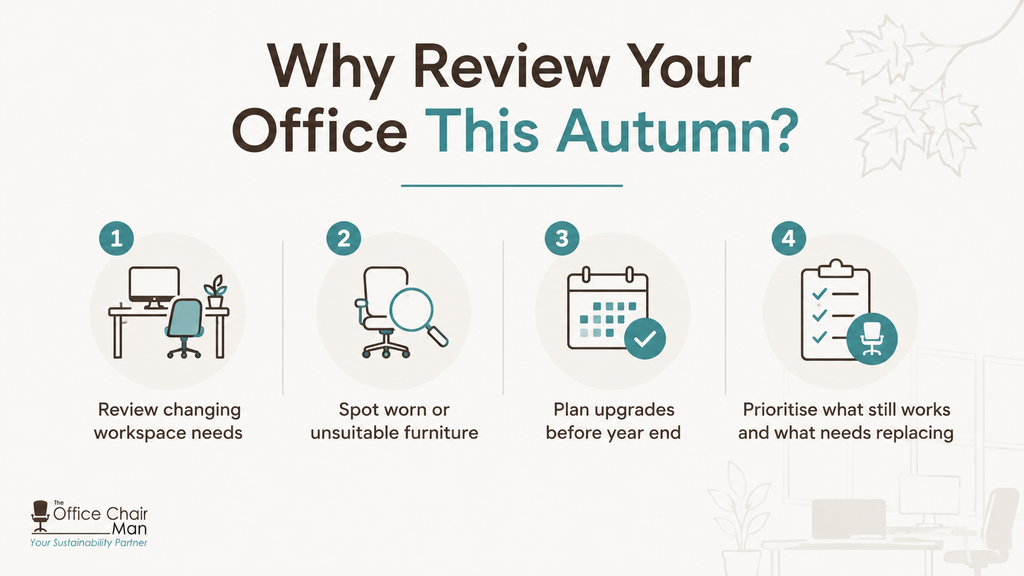
There is no rule saying an office refurbishment has to happen in autumn, but it can be a convenient planning point. Summer is over, the final part of the year is approaching and many businesses are beginning to think about what they want their workplace to look like going into the next year.
Rather than focusing on the season itself, use the opportunity to review whether your current furniture still suits the way your team works.
Ask questions such as:
It is also worth looking at the condition of individual items. Some furniture can remain useful for many years, while other pieces may need attention sooner depending on how heavily they are used and how well they have been maintained.
Our guide to how long office furniture lasts can help when you are deciding whether to retain, repair, move or replace existing items.
A refresh is easier to manage when you know exactly what you already have.
Start by walking through the office area by area. Look at each workstation, storage area, meeting room, breakout space and reception area. The purpose is not simply to identify what looks old. You are trying to work out what is still suitable and what is getting in the way.
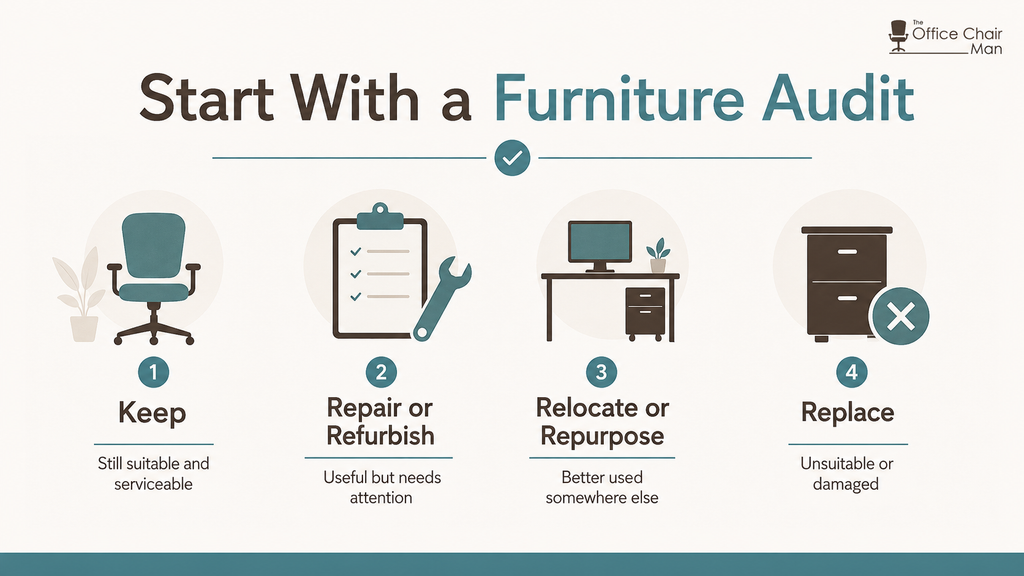
A basic audit can divide furniture into four groups:
| Category | What it means | Typical next step |
| Keep | Furniture remains suitable and serviceable | Leave it in place |
| Repair or refurbish | The item is useful but needs attention | Repair, clean or refurbish where practical |
| Relocate or repurpose | Furniture is suitable but no longer needed in its current position | Move it to another team or area |
| Replace | The item is unsuitable, damaged or no longer meets the requirement | Prioritise it for replacement |
When carrying out the audit, check more than appearance. A desk can look dated and still work perfectly well. A chair can look presentable but have adjustments that no longer operate as they should.
Employee feedback can also be useful, particularly for task seating and workstations. If several people are reporting the same problem, that gives you a clearer idea of what deserves attention.
It also helps to confirm dimensions, quantities and access before you start ordering. Our office fit-out checklist covers practical points to consider when sourcing office furniture.
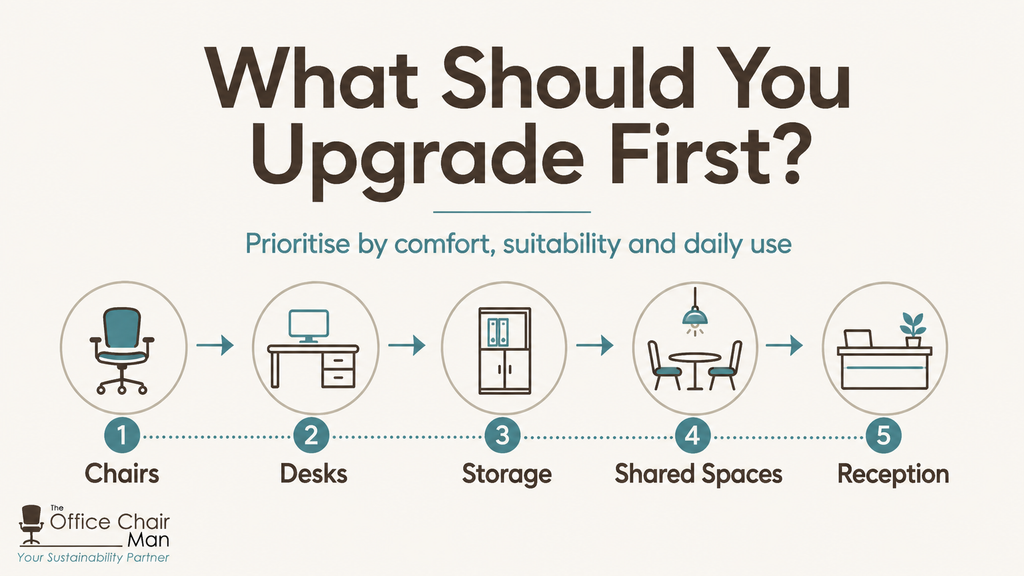
For most offices, chairs deserve to be near the top of the list.
Task seating is used regularly and needs to be suitable for the person using it. Employers also have responsibilities around display screen equipment workstations, which includes assessing seating and workstation suitability for relevant employees.
That makes chairs more than a cosmetic purchase. If a chair is damaged, unstable or no longer adjustable, it should be reviewed before money is spent on decorative improvements elsewhere.
Look at the chair as a complete piece of working equipment. Useful checks include:
A chair does not necessarily need replacing because it has a few cosmetic marks. Equally, a chair should not be kept simply because it still looks tidy.
Function matters most.
Shared workstations and hot-desking can make adjustability particularly important because the same chair may be used by several people.
If you have accumulated different chair types over time, an autumn refresh can also be an opportunity to make seating more consistent across a team. That does not mean every chair has to be identical, but having reliable models with useful adjustment can make future management easier.
Buying quality used seating can make sense when you need to replace a larger quantity of chairs.
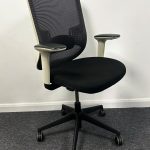
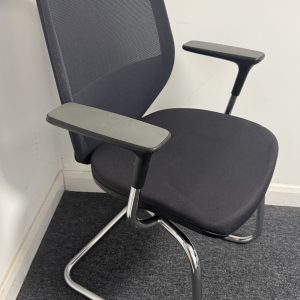
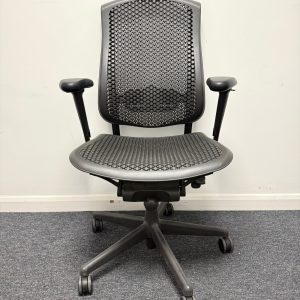
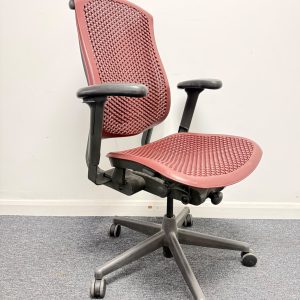
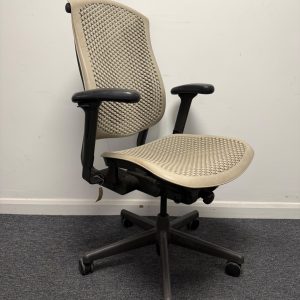
At The Office Chair Man, our range of used office chairs includes seating from recognised commercial furniture manufacturers. When comparing options, consider the condition, adjustment features, available quantities and suitability for your workplace rather than choosing on price alone.
For a larger office refresh, it is also worth checking how many matching chairs are available if visual consistency matters to you.
Desks should usually be reviewed after seating, unless there is an obvious workstation problem that needs immediate attention.
A sound desk does not need replacing simply because it is old. The better question is whether it still fits the office and the work being carried out.
A desk can be perfectly usable in isolation but still be wrong for the room.
For example, oversized individual desks may restrict circulation in a smaller office, while a bench-style arrangement may suit a team that needs to work in the same area. In another workplace, the opposite may be true.
Before ordering anything, ask:
Once you know what the room needs, it becomes much easier to decide whether to retain existing desks or introduce replacements.
You can browse our range of used office desks if your audit shows that workstations need to be changed.
Height-adjustable desks are another option, but they do not have to be introduced across every workstation.
A business may choose to install them in selected positions where they suit the user or working arrangement. As with any desk purchase, check the dimensions, height range, electrical requirements and equipment that will sit on the surface.
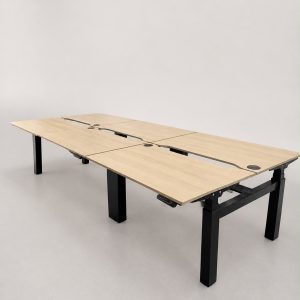
Our used sit-stand desks can be useful when you want to introduce adjustable workstations without treating the entire office as one large replacement project.
Storage often becomes an afterthought, yet it can have a major effect on how effectively a workplace is organised.
Before buying more cupboards or filing cabinets, work out what you are actually storing.
Paper records may have reduced. Teams may need fewer desk pedestals than they once did. Hot-desking may create a greater need for personal lockers. Some filing cabinets may simply be holding items that could be archived or disposed of appropriately.
A good storage review starts inside the furniture.
Ask:
Once those questions are answered, you can select storage around the requirement.
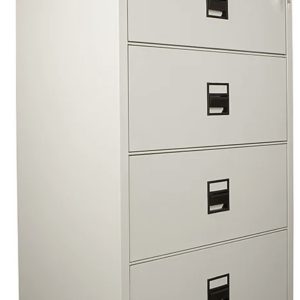
Depending on the office, that might include filing cabinets, desk pedestals, tambour cupboards, double-door cupboards, credenzas or lockers.
Our range of used office storage solutions includes options for both individual and shared storage areas.
Better storage will not solve every layout problem, but removing unnecessary furniture and choosing storage that fits the way the office now works can make a noticeable difference.
Once core workstations are working well, move on to the spaces people share.
This is where an office refresh can easily become expensive if furniture is bought because it looks appealing rather than because the space has a clear function.
Start with how rooms and shared areas are actually being used.
A formal meeting room may still be exactly what your business needs. Another company may find that its large boardroom is rarely full while smaller spaces are in constant demand.
Ask:
The answers should determine what you buy.
If a formal meeting room needs attention, start with practical items such as the table, seating and usable space around them. Our conference room furniture range can help when you are upgrading dedicated meeting areas.
Not every discussion needs a boardroom.
Breakout areas can support shorter, less formal conversations if they are furnished for the way people actually use them. The key is to avoid filling space simply because it is empty.
Our collaborative and breakout furniture range includes seating and furniture designed for shared workplace areas.
Pods and booths can also be considered where the office needs more enclosed spaces.
They may be particularly relevant where open-plan teams need additional places for conversations, online meetings or focused work. Again, the right answer depends on the workplace, so it is worth identifying the specific problem before selecting a solution.
You can see current options in our used office pods range.
Reception matters, especially if clients, candidates, suppliers or other visitors regularly come into the workplace.
That does not mean it should automatically receive the largest share of the refresh budget.
If employees are using unsuitable task seating or damaged workstations, those issues will normally deserve attention before purely decorative reception changes. On the other hand, if reception furniture is damaged, uncomfortable or clearly unsuitable, it may need to move higher up your priority list.
A front-of-house review might include:
The same principle applies to breakout areas. Buy furniture because it makes the area more useful, not simply because a particular style is fashionable.
Our used reception furniture range is a useful starting point if front-of-house furniture is part of your autumn plan.
A full office refresh does not have to happen all at once.
In many cases, breaking the project into stages is easier to manage and gives you a clearer view of which changes are making the biggest difference.
A practical order could be:
That sequence is only a guide. If your office has a pressing problem in another area, deal with that first.
You can also phase a project by department, floor or office zone. This can reduce the number of people affected at any one time.
Before delivery, confirm measurements, quantities, access routes and what will happen to the furniture being removed. If desks or meeting rooms will temporarily be unavailable, communicate that to the team in advance.
Our guide on how to upgrade your office without disrupting the working day covers this in more detail.
If the refresh is being driven by expansion, you may also find our guide to furnishing a growing team useful.
Replacing priority items does not mean every piece of furniture has to be bought new.
Quality used and refurbished commercial office furniture can be a practical way to update a workplace while keeping serviceable furniture in circulation for longer.
At The Office Chair Man, we specialise in pre-owned office furniture and regularly stock chairs, desks, storage, meeting furniture and other workplace pieces from commercial manufacturers.
When planning a larger purchase, check:
The important point is to buy for the requirement rather than simply buying what appears cheapest.
Our guide to second-hand office furniture explains more about the reasons businesses choose pre-owned furniture.
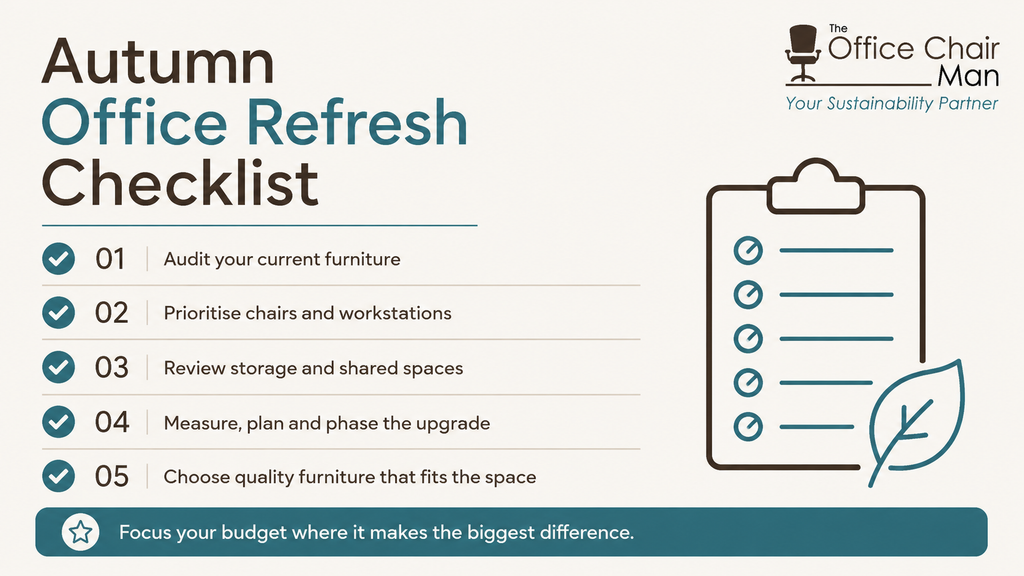
The best autumn office refresh is not necessarily the one with the longest shopping list.
Start with an audit. Identify furniture that is damaged, unsuitable or no longer fits the way your workplace is used. In many offices, chairs will be the first priority, followed by workstations, storage and shared spaces. Reception and cosmetic changes can then follow according to the needs of the business.
By upgrading in the right order, you can focus your budget where it matters most and retain furniture that still has a useful role to play.
If you are planning an office refresh and want help sourcing suitable used furniture, contact The Office Chair Man to discuss your requirements, quantities and available space.