EVERY DAY IS A BLACK FRIDAY HERE AT THE OFFICE CHAIR MAN
SUMMER 2026 OFFER! (Ends 30 September 2026) Qty 1–5 5%, 6–10 10%, 11–15 15%,16–20 20%, 21+ 25% Saving.
An office fit-out can quickly become a race against the calendar. A lease start date, team expansion, office move or damaged furniture may leave little room for long manufacturing lead times. For office managers and facilities teams, the priority is straightforward: secure suitable furniture in the required quantities, get it into the building and make the workplace operational.
Choosing furniture that is already in stock can make that process more manageable. At The Office Chair Man, we supply used and refurbished commercial furniture across categories including office chairs, desks, storage, meeting furniture, reception seating, collaborative furniture and office pods. Because availability changes, buyers should always confirm current quantities and delivery arrangements before committing to a project.
This office fit-out checklist covers the furniture required for day one, the checks to complete before ordering and the practical details that can prevent delays.
Did you know? Furniture must fit the room and be capable of reaching it through every doorway, corridor, staircase or lift.
Use this table to separate essential furniture from items that can be introduced after the office opens.
| Area | Day-one furniture | Useful additions | Checks before ordering |
| Workstations | Desks and task chairs | Sit-stand desks and desk screens | Headcount, dimensions and matching quantities |
| Personal storage | Pedestals or lockers | Additional shared cupboards | Locking requirements and key availability |
| Meeting rooms | Meeting table and chairs | Flip-top tables and stacking chairs | Room capacity, access and screen position |
| Reception | Welcome desk and visitor seating | Coffee table or occasional seating | Appearance, accessibility and circulation |
| Breakout space | Informal seating and tables | High tables and acoustic seating | Space, intended use and cleaning condition |
| Private work areas | Suitable desk and chair | Phone booth or office pod | Power, ventilation, access and installation |
Ordering furniture before checking the space can lead to incorrect quantities, unsuitable dimensions and unnecessary spending. Start with a simple audit of the people, rooms and furniture already available.
Record how many people need a workstation on a normal working day, not simply the organisation’s total headcount. Consider:
Build in a sensible allowance for confirmed growth, but avoid filling the office with unused desks. A clear occupancy figure makes it easier to calculate chair, desk, pedestal and locker quantities.
Not every fit-out needs to begin from an empty room. Inspect furniture already owned by the business and classify each item as suitable for reuse, suitable for another area, repairable, surplus or ready for responsible removal.
Our guide to carrying out an office furniture audit provides a more detailed framework. Reusing suitable existing furniture can reduce the number of products that must be sourced and help the organisation retain value from previous purchases.
Measure the usable floor area as well as doorways, corridors, lifts and staircases. Record:
Mark these details on a floor plan. Furniture must work in the room, but it must also be capable of reaching the room.
Turn the audit into a short brief that a supplier can price and check against available stock. Include the delivery postcode, target date, required quantities, preferred dimensions and any specifications that cannot change. It is also helpful to distinguish firm requirements from preferences.
For example, a desk depth may be fixed because of the floor plan, while the exact shade of the desktop may be flexible. A task chair may need particular adjustment features, while the fabric colour is less important. This distinction allows the supplier to suggest suitable alternatives without weakening the practical specification.
Attach a floor plan where possible and label each room or department. Include photographs of difficult access points, loading areas or furniture that must be matched. A clear brief reduces repeated questions and makes it easier to identify whether one available batch can satisfy the order or whether the fit-out should use a small number of coordinated furniture types.
Divide the buying list into three stages. Day-one furniture enables employees to work safely and effectively. The next stage improves shared and visitor areas. A final stage can add specialist or design-led pieces once the core workplace is functioning.
A practical priority order is:
This prevents a non-essential item from holding up the entire project.
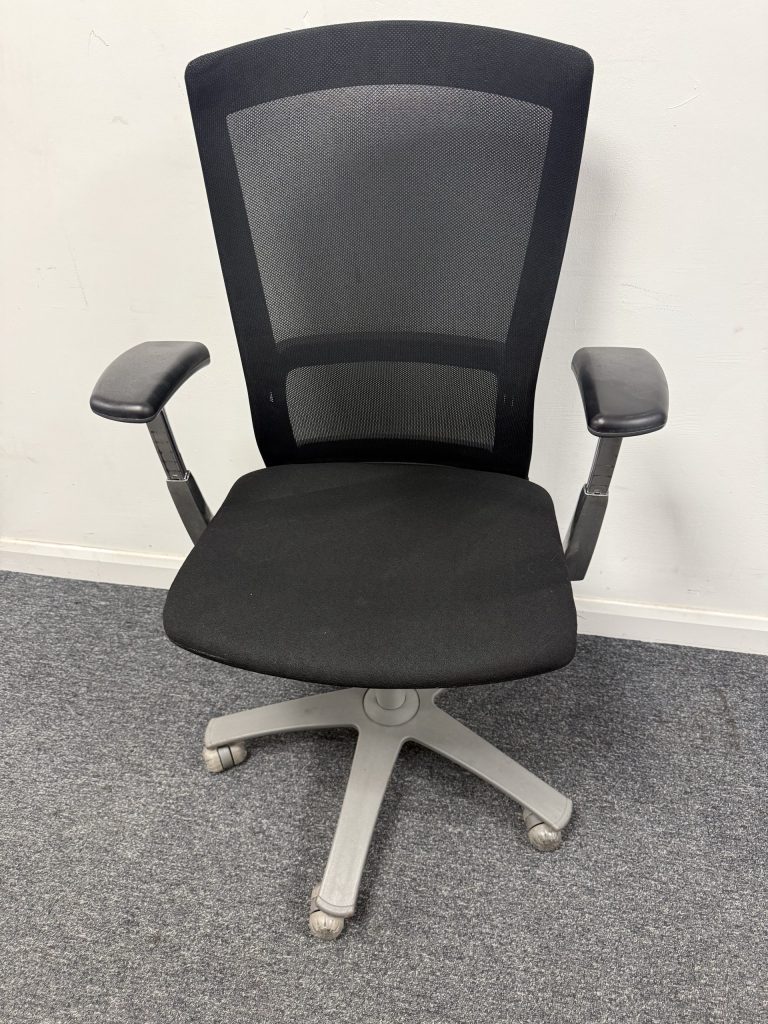
Task chairs are among the most important purchases in an office fit-out because they are used for extended periods. The Health and Safety Executive advises employers to consider the whole workstation, including furniture and any individual requirements.
Check each proposed chair for:
The required quantity matters as much as the model. A chair may be suitable for one executive office but impractical for a 100-person fit-out if only a few matching examples are available. Ask whether the batch has consistent specifications and whether there are visible differences in fabric, frames or components.
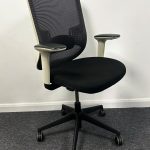
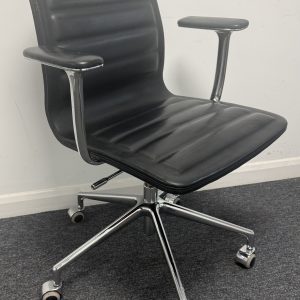
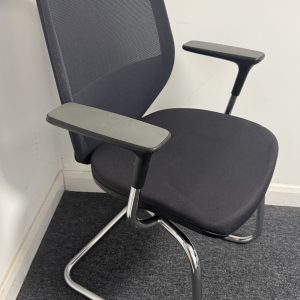
The Office Chair Man lists a wide range of used office chairs, including task, mesh, DSE, orthopaedic, conference, stacking and training chairs. Our guide to bulk office chairs for fit-out projects explains what facilities teams should check when buying larger quantities.
Where possible, include a limited number of spare chairs for confirmed new starters, visitors or temporary replacement needs. Spares should be stored somewhere clean and accessible rather than left in walkways or meeting rooms.
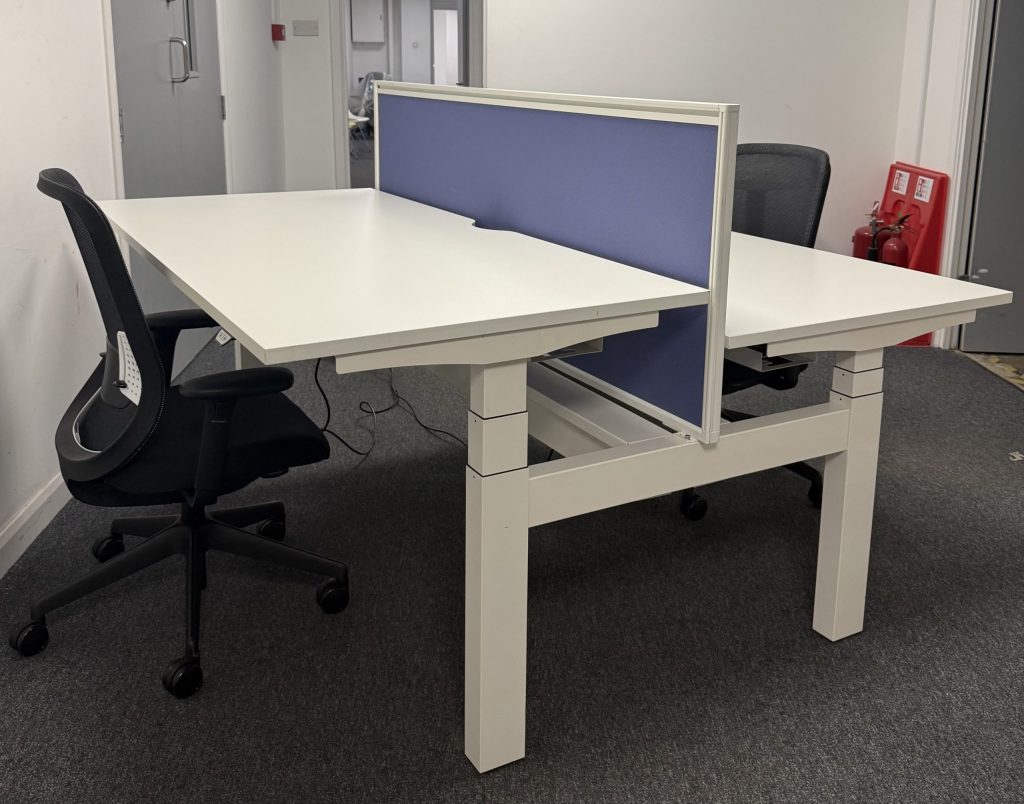
Desks establish the structure of the main workspace. Their dimensions affect circulation, team capacity, cable routes and the position of every chair.
Common options include:
Single desks suit private offices, flexible layouts and spaces where workstations may need to be moved independently. Confirm the width, depth, frame position and any modesty panels before ordering.
Bench desks can provide a consistent layout for teams and make efficient use of space. Check whether the stated quantity refers to individual desk positions, connected benches or complete back-to-back arrangements.
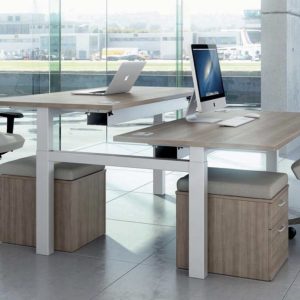
Height-adjustable desks may be selected for particular employees or as part of a wider workplace specification. Confirm the adjustment mechanism, operating range, desktop size, power requirements and condition.
When reviewing used office desks, compare the available quantities with the final floor plan. Standardising one or two desk sizes can simplify ordering and future reconfiguration.
Before approval, check:
Do not assume accessories shown in photographs are included. Ask for a written list of supplied components.
Storage requirements have changed in many workplaces, but they have not disappeared. Employees may still need secure personal space, while teams require somewhere for stationery, equipment and records.
Build the storage specification around actual use:
Check that keys are supplied and locks operate correctly. Measure the unit with doors or drawers fully open so it does not obstruct a route or neighbouring workstation.
Browse used office storage solutions only after completing the storage audit. Replacing every old cabinet like for like may result in more storage than the business needs.
Start with the intended capacity and purpose of each room. A formal boardroom, small video-call room and flexible training suite require different furniture.
For every room, confirm:
Stacking chairs and flip-top tables can support rooms that frequently change layout. Fixed conference tables may be better suited to formal spaces with a consistent capacity. The Office Chair Man supplies both conference room furniture and a broader selection of used office tables.
Meeting furniture does not have to match the desk area exactly. A complementary finish can define the room while allowing the buyer to work with suitable available stock. Condition and consistency within each room remain important, particularly in client-facing spaces.
Reception furniture shapes a visitor’s first physical experience of the workplace. Keep the area uncluttered and provide enough comfortable seating for the number of visitors normally expected.
The checklist should include:
Check sight lines between the entrance and the reception position. Furniture should not block doors, routes or access for wheelchair users.
Our collection of used reception seating includes furniture for waiting areas, lobbies and informal meeting points. As reception is customer-facing, ask for clear condition details before confirming the order.
Breakout areas can support informal meetings, quiet work, lunch breaks and short conversations. Define the purpose before choosing the furniture.
A social area may need sofas, armchairs and coffee tables. A project space may work better with high tables and stools. An open-plan office with limited privacy may benefit from acoustic seating, booths or enclosed pods.
The Office Chair Man offers collaborative and breakout furniture across these categories. For more enclosed options, review the available used office pods.
Before ordering a pod or booth, confirm:
Pods and feature furniture can be valuable additions, but they should not delay desks, chairs or other day-one essentials.
“In stock” should begin a conversation, not end the buying process. Before issuing a purchase order, obtain written confirmation of the details that matter to the project.
Confirm the number of complete, usable items available. Ask whether all products share the same dimensions, finish, upholstery and controls. Refurbished batches can contain cosmetic variation, so agree what level is acceptable.
Ask how items have been inspected, cleaned and prepared. For chairs, confirm that mechanisms and controls work. For desks and tables, check frames, fixings and tops. For storage, confirm locks, keys, drawers and doors.
The product price is only one part of the fit-out budget. Request a quote that clearly identifies:
Ask whether quantity discounts apply, but compare the complete project cost and specification rather than selecting products solely on their unit price.
Available furniture still needs a workable route from the supplier to its final position. Confirm delivery arrangements as early as possible.
Provide:
The Office Chair Man provides office furniture delivery across mainland UK and states that larger quantities can be delivered using its own fleet. Delivery timing depends on the order and destination, so agree a date directly rather than assuming that available stock will arrive on a particular day.
For larger offices, staged installation may be appropriate. Workstations can be prioritised first, followed by meeting, reception and breakout areas. Ensure decorating, flooring, electrical work and data installation are complete before furniture arrives.
Buying used and refurbished furniture keeps products in use for longer and can reduce demand for new resources. UK Government procurement guidance has previously required reuse and refurbishment to be considered before new office furniture, while WRAP provides tools for assessing the environmental, economic and social effects of reuse.
Facilities teams can create a simple project record containing:
Avoid publishing carbon-saving figures unless they have been calculated using a recognised method and project-specific information. A clear record of items reused and kept in service is still useful for internal sustainability reporting.
Read more about used office furniture and ESG targets.
Before approving the project, confirm that:
An effective stock-led fit-out depends on clear priorities and accurate information. Begin with the people who need to work in the space, select furniture that fits the layout and confirm every practical detail before ordering.
If you are planning an office move, expansion or furniture replacement project, contact The Office Chair Man with your quantities, dimensions, location and target date. We can discuss current used and refurbished furniture availability and the delivery requirements for your project.