EVERY DAY IS A BLACK FRIDAY HERE AT THE OFFICE CHAIR MAN
SUMMER 2026 OFFER! (Ends 31 August 2026) Qty 1–5 5%, 6–10 10%, 11–15 15%,16–20 20%, 21+ 25% Saving.
An office move involves far more than packing boxes and booking a removals team. Furniture needs just as much attention as IT, utilities, access and staff communications because desks, chairs, storage and meeting furniture all affect whether the new workspace is ready to use from day one.
At The Office Chair Man, we help businesses furnish workplaces with quality used and refurbished commercial furniture. Before relocating, decide as early as possible what is moving, what needs replacing and what should not make the journey.
A clear furniture plan helps you avoid moving items that no longer suit the business, buying products that do not fit the new space, or discovering too late that a large table, cupboard or desk will not get through the building.
The best approach is simple: audit what you have, measure the new office, plan each area, identify gaps, arrange delivery and make sure everyone knows where each item belongs.
Did you know? A piece of furniture can fit perfectly in its new room but still cause problems if it cannot get through the lift, corridor or doorway. What access checks are on your office move list?
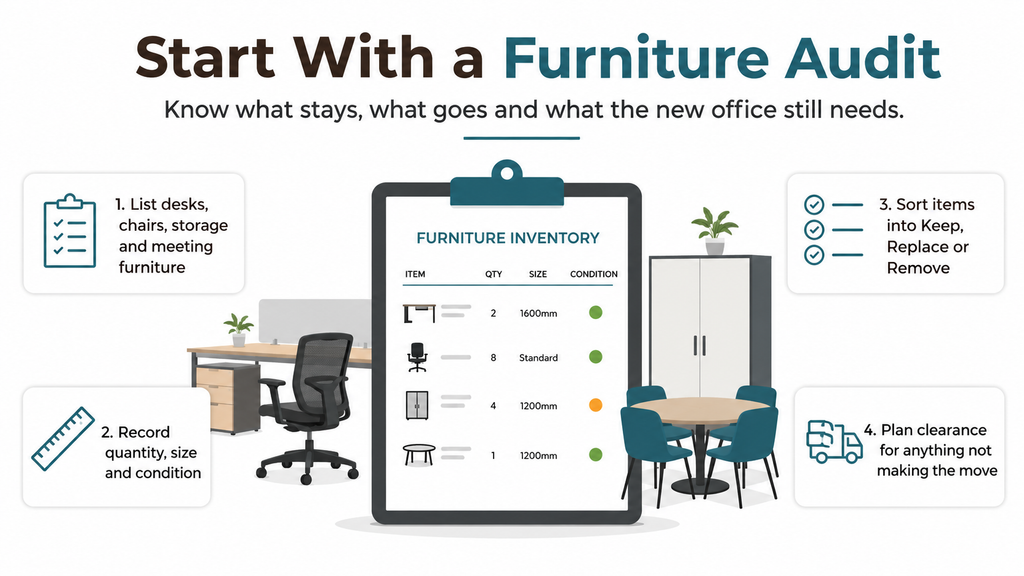
Before you order anything new or ask a removals company to move your existing furniture, start with an accurate inventory.
Walk through the current office and record what you have. This should include more than desks and chairs. Depending on your workplace, your list may include:
For each item or furniture type, note the quantity, dimensions, condition and current location. Record its intended destination too, if known.
Once you have an inventory, divide it into three practical categories:
This avoids the common mistake of treating every piece of furniture as something that automatically needs to move.
Furniture may no longer be suitable because it is worn, damaged, the wrong size, surplus to requirements or no longer appropriate for how your team works.
If commercial furniture will not be making the move, consider whether it may be suitable for resale, reuse, recycling or clearance.
The Office Chair Man offers an office clearance service for businesses that need help clearing unwanted office furniture as part of a move or workplace change.
The main objective at this stage is clarity. By the time you finish the audit, you should know what definitely stays, what definitely goes and what still needs a decision.
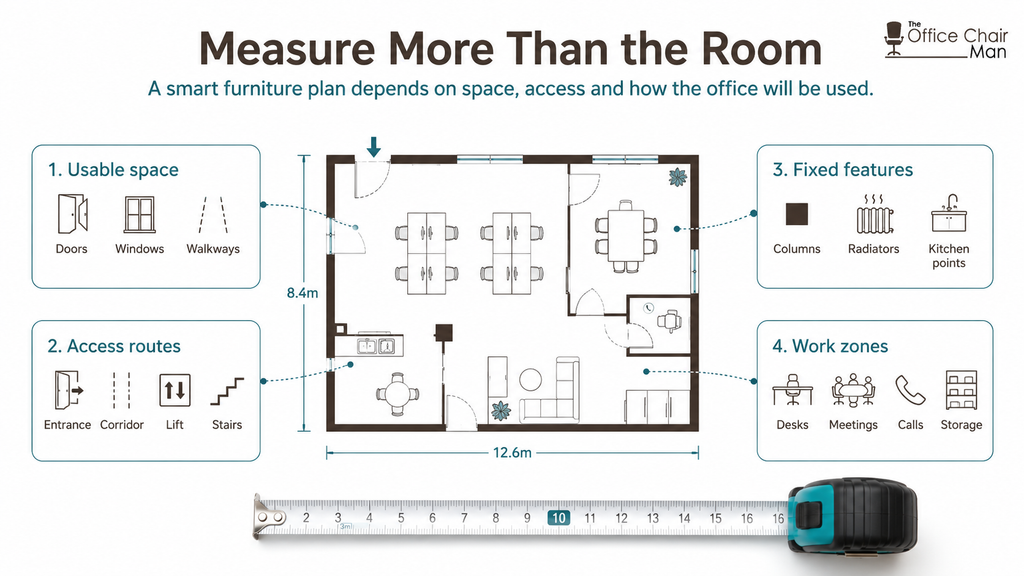
The overall floor area of the new office only tells part of the story. A desk may fit comfortably within the square footage on paper but still be unsuitable because of a doorway, radiator, column, walkway or other fixed feature.
Before finalising your furniture plan, record the dimensions and physical constraints of the new workplace.
Your measurements should take account of:
If you are retaining existing furniture, add those items to the plan using their actual dimensions rather than relying on memory or rough estimates.
Check how furniture interacts with doors, access routes and circulation areas. A layout can look efficient on paper but still be awkward once people are using it.
The final position is only one part of the journey. You also need to know whether the furniture can physically reach that position.
Check:
A large table that fits perfectly in a boardroom is not much use if it cannot pass through the lift or doorway.
Our office fit-out checklist also recommends measuring rooms, lifts, doorways and access routes before furniture is ordered or delivered.
An office move is also an opportunity to reconsider how the space is used.
Instead of simply recreating the old layout, think about the activities that need to happen in the new workplace. You may need areas for:
The right layout will depend on your team, working patterns and available space.
Once you understand the new office, break your furniture requirements down by zone. This makes it easier to see what you already have and what still needs to be sourced.
Start with the number and type of workstations required.
Ask:
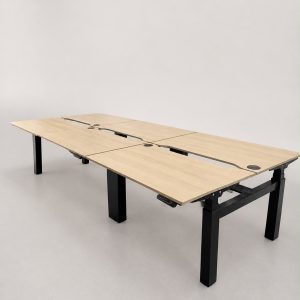
If you need additional workstations, our range of used office desks includes different desk styles and configurations that can be considered as part of a relocation.
Chairs deserve their own review. It is easy to focus on desk numbers and assume seating will simply follow, but every workstation needs a suitable chair.
Check:
Employers should also consider their responsibilities around display screen equipment and suitable workstation set-up where applicable.
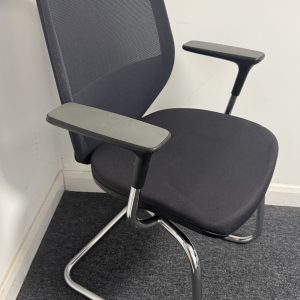
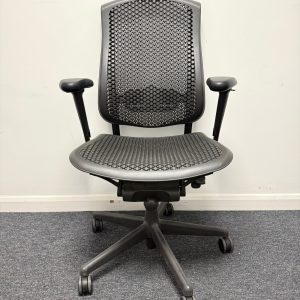
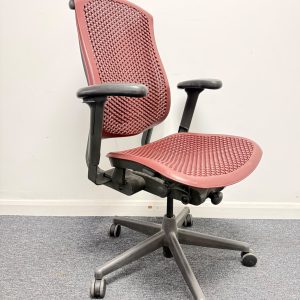
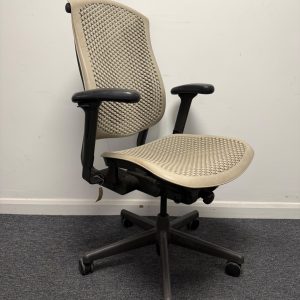
If replacement or additional seating is needed, The Office Chair Man stocks a wide range of used office chairs.
Office moves are a useful time to review physical storage rather than automatically reproducing what you had before.
Consider whether your team still needs the same number of:
Some workplaces need more personal storage because desks are shared. Others may need less filing capacity because more records are stored digitally.
The aim is not to remove storage for the sake of it. It is to make sure the storage you move or buy matches how the new office will actually operate.
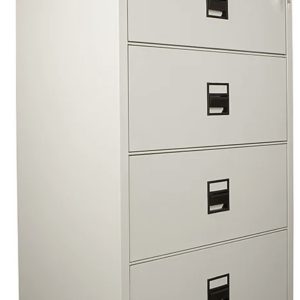
Our used office storage solutions can help if the new workplace needs additional filing, personal or shared storage.
Workstations are only one part of a functioning office. Think about how people will meet, collaborate and take calls.
Your plan might include:
If you are creating more flexible areas in the new office, our collaborative and breakout furniture range is worth considering.
By this stage, compare your furniture inventory with the plan for the new office.
Furniture may be worth retaining if it is in suitable condition, fits the new layout, is still required by the business and can be moved into the building without creating unnecessary practical problems.
Everything else becomes a gap to solve.
You may find that:
Identify missing items early so you have more time to source suitable products and coordinate delivery.
Used and refurbished office furniture can be a practical option when furnishing a new workplace.
At The Office Chair Man, we supply used office furniture across multiple commercial categories, including desks, chairs, storage, collaborative furniture and other workplace pieces.
Availability will always depend on current stock, quantities and the specification you need, so it is sensible to check those details early in the planning process.
If you are working on a larger relocation, our guide to furnishing a 50 to 100 desk office using available stock also covers practical considerations around larger quantities.
Choosing the furniture is only part of the job. You also need to coordinate how it will arrive, who will receive it and where it will go.
Before any delivery, make sure the relevant supplier, installer or removals team has the information they need.
Useful details include:
If your new office is in a managed building, it may also have rules about when larger deliveries can take place. Check this with the building manager before confirming a delivery date.
Depending on the project, furniture may be delivered:
The timing should work with removals, IT installation, building access and other contractors.
Give movers or installers a clear plan showing where furniture belongs.
For example, label desks by zone, meeting tables by room and storage units by department.
The Office Chair Man provides office furniture delivery for customers purchasing furniture from us, with delivery requirements discussed as part of the order.
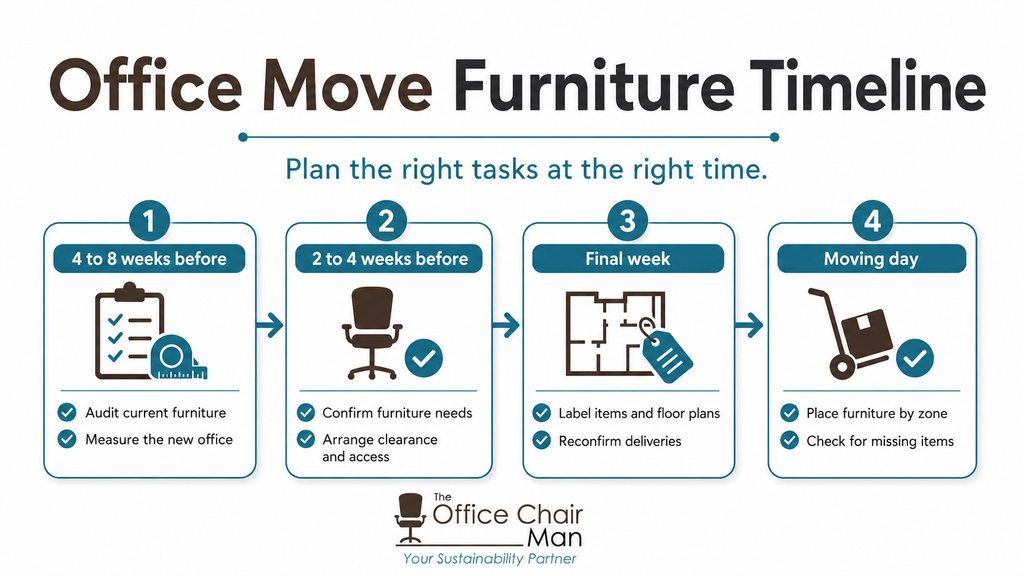
A simple timetable can prevent important furniture decisions being pushed into the final few days.
The exact timing will depend on the size and complexity of your relocation, but this framework gives you a starting point.
| When | Furniture planning tasks |
| 4 to 8 weeks before | Audit existing furniture, measure the new office, identify what is moving, create the initial layout and list any gaps |
| 2 to 4 weeks before | Confirm furniture requirements, check availability, arrange clearance of unwanted items and agree building access |
| Final week | Label furniture, reconfirm deliveries, provide floor plans and make sure movers or installers have access information |
| Moving day | Position furniture by zone, check items against the inventory and record anything missing or damaged |
| Immediately afterwards | Review workstations, meeting spaces and storage, then create a short list of any outstanding furniture needs |
Focus on the bigger decisions first:
Move from planning into confirmation:
Reduce the risk of moving-day confusion:
Once furniture starts arriving, check it against the plan rather than relying on memory.
Record missing, damaged or incorrectly placed items and keep a short snagging list.
Furniture decisions can make an office move harder if they are left too late.
Do not assume that every item in the existing office should be transported. Review condition, size and future need before it goes onto the removals list.
A piece of furniture needs to fit its destination and the route leading to it. Check doors, lifts, corridors and stairs as well as floor space.
Make sure the number of desks, chairs, storage units and meeting-room items is agreed before you order or relocate furniture.
A desk plan is not a complete furniture plan. Include chairs, meeting spaces, storage, reception areas, booths, breakout areas and other furniture your team will need.
The new workplace may have a different layout, headcount or working pattern. Use the move as an opportunity to check whether the previous furniture arrangement still makes sense.
Delivery times, loading arrangements, access restrictions and room allocation should be agreed before furniture starts arriving.
Headcount, room use and project requirements can shift during a relocation. Keep your inventory and floor plan up to date so suppliers, movers and internal teams are working from the same information.
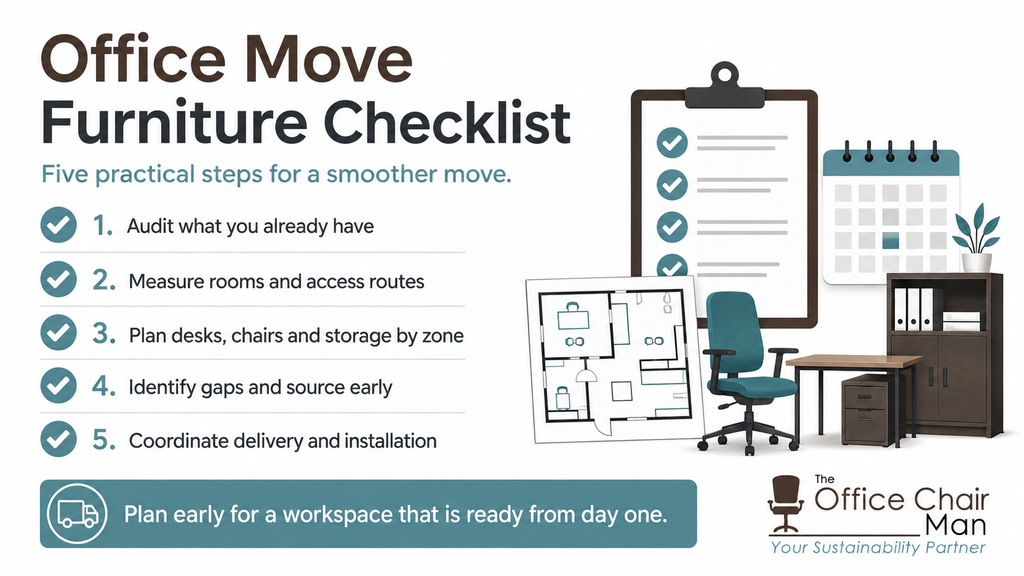
The most successful furniture planning starts long before the first removal van arrives.
A useful sequence is:
Audit → measure → plan → decide what stays → identify gaps → arrange delivery → relocate and install
Working through those stages in order helps clarify what to keep, remove and source for the new workplace.
If you are planning an office move and need desks, chairs, storage, collaborative furniture or other commercial office pieces, The Office Chair Man can help you explore suitable used and refurbished options based on your requirements and current stock.
When you are ready to discuss quantities, dimensions, location and your target date, contact The Office Chair Man.